AI Development Outpaces Traditional Application Security, Info-Tech Finds
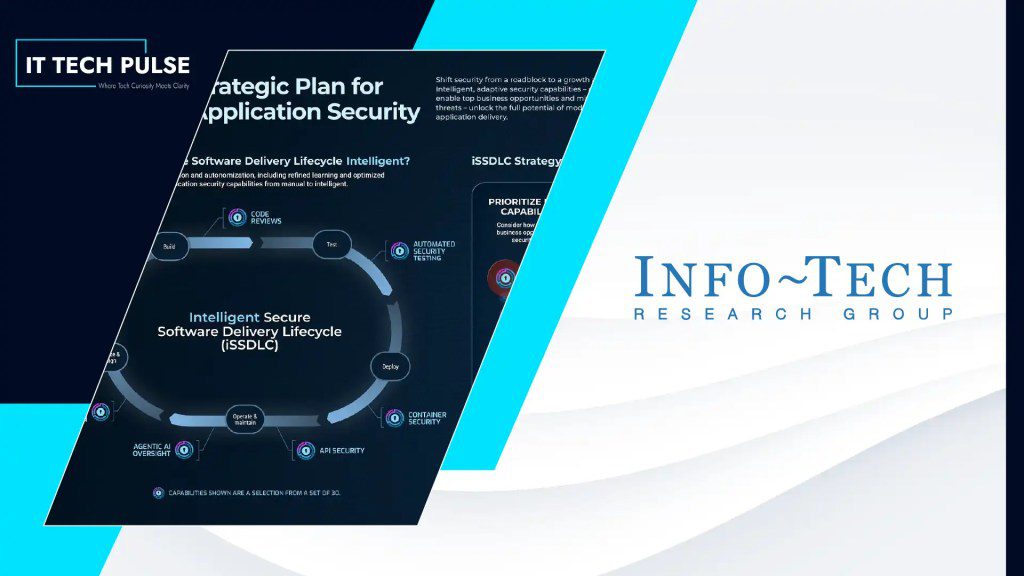
Applications are now a primary target for threat actors, yet many organizations still rely on traditional secure software development lifecycles (SSDLCs) that limit their ability to respond to evolving risk. Recent research from Info-Tech Research Group shows a need for organizations to evolve their traditional SSDLC approach into an intelligent, capabilities-driven framework that embeds security capabilities throughout every stage of software delivery. Grounded in step-by-step guidance and tools, Info-Tech’s newly released blueprint, develop a Strategic Plan for Intelligent Application Security, is designed to help IT and security leaders assess current maturity, prioritize initiatives, and establish a strategic roadmap for risk-aligned, intelligent security practices.
Info-Tech‘s findings show that an intelligent SSDLC can shift security from a roadblock to an enabler of faster, more resilient application delivery. As AI-assisted development and automation increase the speed and scale of software delivery, security capabilities must evolve alongside them. The firm advises organizations to combine intelligent tooling and automation with human expertise, while strengthening collaboration among security, development, and operations teams and prioritizing improvements based on business value and risk.
Also Read: IT Tech Pulse Exclusive Interview with Pete Johnson Field CTO, Artificial Intelligence at MongoDB
“Building a scalable and adaptive application security program through an intelligent approach positions security as a business enabler,” says Ahmad Jowhar, senior research analyst at Info-Tech Research Group. “It strengthens foundational practices, increases development velocity, and ensures resilience across modern development pipelines, empowering organizations to deliver securely at scale.”
Key Challenges in Modern Application Security
Many organizations struggle to modernize their application security practices, despite significant investments. Info-Tech’s research highlights key obstacles they face:
- Fragmented coordination between security, development, and operations teams.
- Limited visibility into maturity and capability gaps across the software lifecycle.
- Adoption of new tools without proper integration or governance alignment.
- Lack of a risk-based prioritization model to focus investment on the most important business opportunities and security threats.
Info-Tech’s Practical Framework for Intelligent SSDLC Modernization
To help organizations overcome these challenges, Info-Tech’s Develop a Strategic Plan for Intelligent Application Security blueprint outlines a three-phase framework to develop an intelligent application security strategy:
- Phase 1: Prioritize iSSDLC Capabilities – IT, security, application, and business stakeholders identify business opportunities and security threats, establish metrics, and define governance roles and responsibilities to determine which application security capabilities matter most.
- Phase 2: Assess Capability Maturity – Security, IT risk, privacy, compliance, and business stakeholders assess the organization’s current maturity across application security capabilities and determine appropriate target states based on risk, business priorities, readiness, and automation potential.
- Phase 3: Develop a Strategic Plan – Security and application leaders develop gap-closing initiatives, evaluate costs and benefits, prioritize investments, and build a roadmap and strategy deck to communicate the plan and secure stakeholder support.
Also Read: Enterprise AI Architecture Best Practices for Scalable Deployment
Info-Tech’s Develop a Strategic Plan for Intelligent Application Security blueprint includes a comprehensive framework, a Capabilities Assessment Tool, and a customizable Strategic Plan Template. Together, these resources enable organizations to build a scalable, adaptive application security program that aligns with organizational objectives and can withstand evolving threats.
Write to us [wasim.a@demandmediaagency.com] to learn more about our exclusive editorial packages and programmes.