

IT Tech Pulse Exclusive Interview with Daniel Raskin, CMO at Virtana
Stay updated with us
Sign up for our newsletter
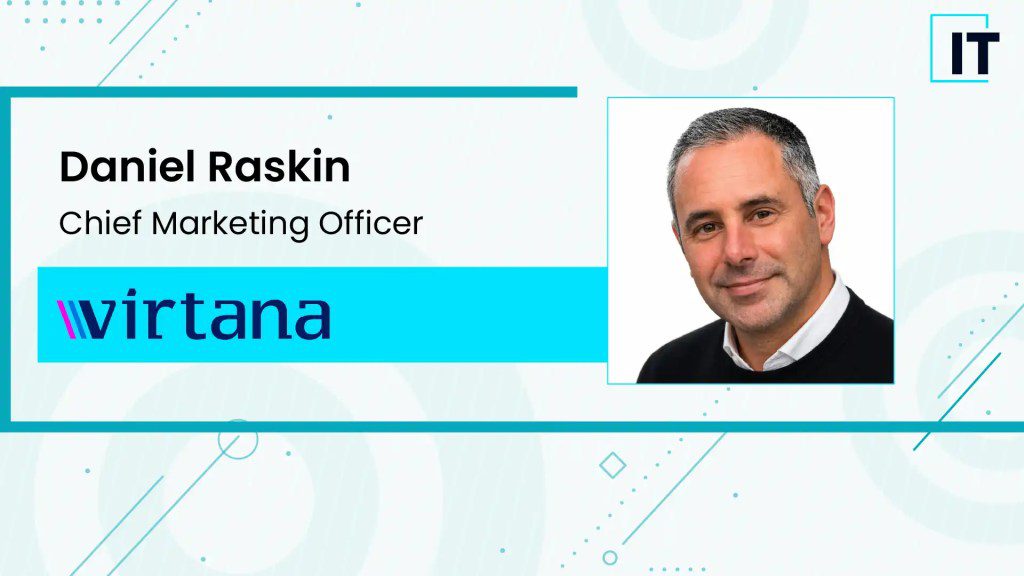
In this exclusive interview, Daniel Raskin, CMO at Virtana, discusses agentic observability, AI infrastructure resilience, SLA-as-Code, and how enterprises can adopt autonomous operations without losing governance and human oversight.
You’ve helped scale enterprise technology companies for decades, from McGraw-Hill, Sun Microsystems, and ForgeRock to Kinetica, and co-founded an agentic AI company before joining Virtana. What drew you to agentic observability at this moment?
Each of those companies sat at a different layer of the same story: enterprises digitizing their most critical services and depending on technology to deliver them without interruption. Across that arc, one thing became clear. The technology stack beneath those services has outgrown the operating model built to run it. The Chief Risk Officers I talk with now point to technology and infrastructure failure as one of the biggest sources of catastrophic risk to their business.
Agentic observability is how that risk gets managed. It is the operational discipline that keeps high-stakes services resilient, performant, and efficient as they scale into AI. It gives AI agents full-stack context across applications, cloud, infrastructure, and AI factories, so they can find root cause and act with people in control. I joined Virtana because its platform does exactly that, helping organizations get the full return on their technology investments, whether on-premises, in the cloud, or hybrid. That return matters more every day as AI drives a surge in infrastructure spending.
Across infrastructure, identity, analytics, and AI, you’ve built marketing organizations and driven growth. How has that breadth shaped the way you think about observability for AI-powered and hybrid IT environments?
Having operated inside infrastructure, identity, and analytics software, I’ve watched enterprises adopt technology in layers: best-of-breed compute, storage, cloud, and now AI platforms, each optimized on its own terms. That breadth also showed me where those layers stop talking to each other. The heterogeneity that gives enterprises flexibility is the same heterogeneity that fragments visibility, especially now that AI workloads are running on infrastructure most organizations never designed with AI in mind.
That’s shaped my conviction that observability has to operate as a system-level discipline. Enterprises need one operational view reasoning across applications, cloud, infrastructure, networks, storage, and AI workloads together. Adding another dashboard to a pile of tools doesn’t solve fragmentation. Connecting the layers does.
Virtana just launched Agentic SLA Management, turning service-level agreements from static reports into an operational control plane. What gap in enterprise operations were you solving, and why now?
For years, SLA reporting has been a retrospective monthly or quarterly readout on whether a company hit its numbers last period. Now AI, hybrid infrastructure, and distributed systems have created a level of complexity that can no longer be managed through dashboards, tickets, and manual workflows. Our research found that 75% of enterprises now report double-digit AI job failure rates, which points directly to an emerging service assurance problem.
Agentic SLA Management turns the SLA itself into executable code. Enterprises get a control plane where service objectives, governance policies, and business commitments are continuously validated against real performance, with specialized agents handling alerting, response, remediation, and optimization. Organizations have spent decades measuring service levels. The next decade will be defined by assuring them.
Your research found 75% of enterprises report double-digit AI job failure rates, and 56% cite storage and networking as their top constraint. How does SLA-as-Code address those risks?
Those two numbers define the risk we’re solving for. At scale, they show up as failed jobs, wasted GPU cycles, and service degradation that a static SLA report only tells you about after it’s already happened.
SLA-as-Code lets organizations define service objectives and operational thresholds up front, then continuously validate performance against them in real time. The Alert, Response, Remediation, and Optimization agents all act on the same full-stack telemetry. When storage or network capacity becomes a constraint, that’s visible and governed continuously instead of being discovered after an SLA has already been missed.
You’ve said human-managed operations has reached its limits and legacy tools only surface telemetry and symptoms. What makes system-aware observability and the Virtana MCP Server categorically different from traditional monitoring dashboards?
Legacy monitoring tools look at one piece of the puzzle, such as the application layer or the infrastructure layer, and only surface telemetry and symptoms, such as an alert that a metric crossed a threshold or a dashboard showing a service is degraded. They don’t tell you why, and they can’t look at the system as a whole. System-aware observability brings applications, cloud, infrastructure, services, networks, storage, data platforms, and AI factories into a single model with full context and correlation, and reasons across that complete execution system as one live map of dependencies. The Virtana MCP Server exposes that context to AI agents and leading LLMs in natural language, so they can query and act on real operational context instead of isolated signals. The result is the ability to identify cause and effect across the full stack, prove root cause, and drive precise action.
Agentic SLA Management coordinates specialized Alert, Response, Remediation, and Optimization agents. How do these service assurance agents reason and act autonomously without losing the human oversight enterprises still require?
Each agent has a defined scope. The Alert Agent discovers, correlates, and prioritizes telemetry across the stack. The Response Agent evaluates business impact in real time and orchestrates escalation. The Remediation Agent identifies root cause and executes or recommends corrective action. The Optimization Agent continuously analyzes performance, utilization, and cost.
With autonomy, the risk lies in acting confidently on incomplete context. That’s the failure mode we’ve seen when agentic capability gets layered onto fragmented monitoring. The agents operate on the same full-stack, real-time telemetry and dependency map, so their recommendations are grounded in evidence rather than an isolated alert. Then, depending on a company’s own governance policies, that evidence either drives automated remediation directly or gets passed, with the supporting evidence attached, to a human operator to approve. Agentic systems are only as effective as the operational context they can access.
You’ve said the next decade will be defined by assuring service levels, not just measuring them. Looking to 2027, how will autonomous operations reshape how enterprises run mission-critical infrastructure?
Organizations have spent decades measuring service levels after the fact. As AI increases the scale and complexity of enterprise operations, that retrospective model breaks down. Agents are only as effective as the operational context they can access, and most enterprises still don’t have that context unified today. The shift ahead is from human-managed operations, where people stitch together fragmented data mid-incident, to autonomous operations, where unified observability functions as the control plane and agents assure service levels continuously, without enterprises giving up control. The human war room becomes an agentic war room.
For the CIOs, SREs, and platform leaders following your work, what’s your one piece of advice on adopting agentic operations responsibly while scaling AI workloads across hybrid infrastructure?
Every CIO I talk to is under pressure to do two things at once: support more complex, AI-driven services, and do it more efficiently. The instinct under that pressure is to move fast on automation before the underlying visibility is in place, but agentic capability layered onto fragmented observability just amplifies the same visibility gaps at machine speed.
My advice is to get full-stack, system-wide visibility in place first. You can’t apply agentic capabilities and expect true autonomous outcomes unless you have real-time, dynamic mapping and correlation across the whole system. Treat it as a precondition. Get that right, and agentic operations scale governance and resilience right alongside AI adoption, instead of trading one for the other.
Thank you so much, Daniel, for participating in our IT Tech Pulse Interview series. We look forward to having you and Virtana leaders again!
Write to us [editorial@demandmediaagency.com] to learn more about our exclusive editorial packages and programmes.
Daniel Raskin is an accomplished marketing executive with over 25 years of experience. As the CMO at Virtana, Daniel is responsible for driving marketing strategy and leading global initiatives that build brand, generate demand, and accelerate growth.
Daniel has a proven track record of building high-performing marketing teams and driving profitable growth across AI, cloud, and enterprise technology, and has guided companies through every stage of the journey—from seed to public.
Prior to joining Virtana, Daniel co-founded Mperativ, a venture-backed startup that used Agentic AI to create executive narratives and attribution linking marketing to pipeline and revenue. He has also held senior leadership roles at Sun Microsystems, McGraw-Hill, ForgeRock, and Kinetica.
Virtana delivers the deepest and broadest observability platform for hybrid and multi-cloud, with full-stack AI observability that spans applications, services, data pipelines, GPUs, CPUs, networks, and storage. Our AI-powered Virtana Platform unifies metrics, logs, traces, events, and topology into a single, real-time view so IT, operations, and platform teams can accelerate RCA, stabilize SLOs, control costs, and eliminate tool sprawl. From AI factories and cloud-native applications to legacy data centers, Virtana helps enterprises ensure availability, efficiency, and resiliency across their most complex environments, proving the business value of every workload, token, and watt. Trusted by more than 150 Global 2000 organizations, Virtana turns deep observability into a strategic advantage for industries including financial services, healthcare, public sector, and technology.


