Data Governance in 2026: Ensuring Compliance and Trust
Stay updated with us
Sign up for our newsletter

For years, data governance was treated as a control function.
Something tied to compliance audits, access management, or regulatory checklists.
That approach no longer works.
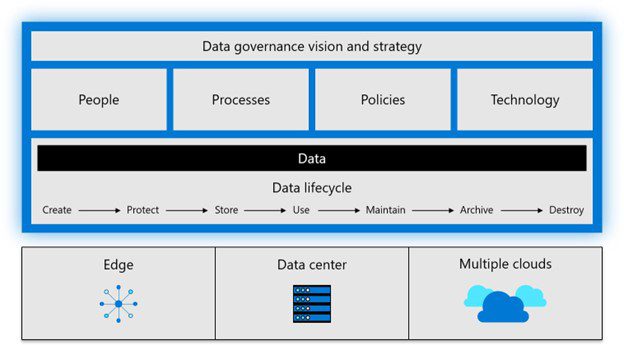
In 2026, governance is becoming a strategic layer for AI, analytics, security, and enterprise trust. Organizations are handling larger volumes of structured and unstructured data, moving workloads across cloud environments, enabling real-time systems, and scaling generative AI initiatives. Governance can no longer sit at the edge of the architecture. It has to be embedded within it.
This is what defines data governance in 2026:
not just protecting data but enabling organizations to use it confidently at scale.
Why Governance Is Becoming More Critical
The modern enterprise operates across fragmented systems:
- Cloud platforms
- SaaS applications
- Data lakes
- Streaming pipelines
- AI models
- Analytics platforms
Data now moves continuously between teams, systems, and regions. That complexity creates risk.
Without governance:
- Sensitive information spreads uncontrollably
- Reports become inconsistent
- AI systems learn from unreliable data
- Compliance gaps increase
- Trust in enterprise data declines
This is why organizations are investing heavily in modern data governance frameworks instead of treating governance as a standalone compliance activity.
Governance Is No Longer Separate from Data Engineering
Governance used to happen after data movement.
Today, governance must happen during it.
This shift is directly connected to the rise of scalable data pipelines for enterprise growth.
As pipelines become more distributed and real-time, governance needs to cover:
- Data lineage
- Schema validation
- Access control
- Data quality monitoring
- Metadata management
- Retention policies
Governance is now part of operational architecture, not only reporting oversight.
AI Is Reshaping Governance Requirements
Generative AI and enterprise AI systems have dramatically expanded governance challenges.
AI systems rely on:
- Large-scale datasets
- Unstructured enterprise content
- Continuous model retraining
- Real-time data access
This increases the risk of:
- Data leakage
- Bias amplification
- Hallucinations
- Uncontrolled access to sensitive information
That is why AI-driven data governance is becoming a major priority.
Organizations are now implementing governance models that can:
- Monitor AI training data
- Track lineage across AI systems
- Apply automated classification rules
- Restrict sensitive content exposure
- Improve explainability and auditability
The growing dependence on AI also reinforces the importance of data engineering in AI and machine learning success, where governance directly affects model quality and reliability.
Cloud Environments Changed Governance Completely
Traditional governance frameworks were designed for centralized systems.
Cloud environments changed that.
Data now moves across:
- Multi-cloud environments
- Hybrid infrastructure
- Third-party SaaS platforms
- Distributed analytics ecosystems
This creates new governance challenges around:
- Visibility
- Access management
- Residency requirements
- Cross-platform consistency
As a result, cloud data governance strategies are evolving rapidly.
Modern governance models now focus on:
- Unified metadata layers
- Automated policy enforcement
- Real-time monitoring
- Role-based access management
- Cross-platform observability
The challenge is no longer only protecting data. It is maintaining governance consistency across constantly changing systems.
Governance and Real-Time Data Systems
Real-time systems increase governance complexity significantly.
Streaming architectures process data continuously, often across distributed environments. Governance controls must operate without slowing the system itself.
This becomes especially important in environments using real-time data engineering for AI-driven businesses, where pipelines support:
- Fraud detection
- Operational monitoring
- Customer personalization
- AI inference systems
In these systems, governance must happen immediately, not retrospectively.
That means:
- Automated validation
- Real-time anomaly detection
- Continuous monitoring
- Dynamic access controls
Governance is becoming more automated because manual oversight cannot scale at real-time speed.
Enterprise Data Security Is Expanding Beyond Access Control
Security used to focus primarily on perimeter protection and user permissions.
That model is outdated.
Modern enterprise data security now includes:
- Data lineage visibility
- Encryption across pipelines
- Zero-trust architectures
- AI governance controls
- Behavioral monitoring
- Sensitive data discovery
As enterprises scale analytics and AI, security teams need visibility into how data flows—not just where it is stored.
This is particularly important in architectures involving:
- Data lakes
- Warehouses
- Lakehouse platforms
- Streaming systems
Organizations modernizing storage infrastructure often encounter governance complexity while evaluating data lakes vs data warehouses vs lakehouse architecture.
The more flexible the architecture becomes, the more important governance controls become.
Compliance Is Becoming Continuous
Compliance used to be periodic.
Audits happened quarterly or annually.
That approach no longer works in cloud-native environments where data changes constantly.
Modern governance frameworks increasingly support:
- Continuous compliance monitoring
- Automated audit trails
- Policy enforcement in pipelines
- Real-time reporting visibility
This is where data compliance tools are evolving beyond documentation systems into operational platforms.
The focus is shifting toward:
- Prevention instead of remediation
- Automation instead of manual oversight
- Continuous governance instead of periodic review
Governance Must Align with Data Architecture
One of the biggest governance mistakes organizations make is treating governance separately from architecture design.
Governance outcomes depend heavily on:
- Pipeline structure
- Storage architecture
- Data movement patterns
- Transformation models
For example, governance requirements differ significantly between ETL and ELT environments.
Organizations evaluating ETL vs ELT for modern data pipelines often discover that ELT environments require stronger downstream governance because raw data enters systems earlier.
Architecture decisions directly affect governance complexity.
The Rise of Automated Governance
Manual governance cannot scale with modern enterprise environments.
That is why automation is becoming central to governance strategies.
Modern governance platforms increasingly use:
- AI-driven anomaly detection
- Automated metadata tagging
- Intelligent lineage tracking
- Policy recommendation systems
- Automated classification engines
This is where AI-driven data governance becomes operational rather than theoretical.
Governance systems themselves are becoming more intelligent.
Industry Perspective: Governance Priorities Vary by Sector
Banking and Financial Services
Focus heavily on:
- Regulatory compliance
- Transaction traceability
- Fraud monitoring
- Risk governance
Healthcare
Priorities include:
- Patient privacy
- Data accuracy
- Access control
- Compliance reporting
SaaS and Technology
Emphasis shifts toward:
- Cross-platform governance
- API security
- User data protection
- AI governance readiness
Retail and E-Commerce
Focus areas include:
- Customer data protection
- Real-time personalization governance
- Consent management
- Data quality consistency
Different industries prioritize different controls, but trust remains the common goal.
A Practical Governance Framework for 2026
Organizations modernizing governance should focus on:
- Centralized metadata visibility
- Clear ownership models
- Real-time monitoring capabilities
- Automated policy enforcement
- AI governance readiness
- Cloud-native security models
- Cross-platform observability
Strong governance frameworks support innovation instead of slowing it down.
The Bigger Shift: Governance Is Becoming a Business Enabler
Governance used to be viewed as friction.
Now it is becoming infrastructure for trust.
Organizations cannot scale AI, analytics, personalization, or automation without trusted data systems.
The competitive advantage is shifting toward companies that can:
- Govern data efficiently
- Secure it consistently
- Use it responsibly
- Scale it confidently
That is the real evolution of enterprise data governance in 2026.
Conclusion
At some point, governance stops being only a compliance requirement and becomes a foundation for enterprise decision-making.
As AI systems scale, cloud environments expand, and real-time pipelines accelerate, governance becomes central to operational reliability and business trust.
The strongest organizations will not necessarily be the ones collecting the most data.
They will be the ones governing it most effectively.
FAQs
Why is data governance becoming more important in 2026?
Because enterprises are managing more distributed, real-time, and AI-driven data environments than ever before.
How does AI affect data governance?
AI increases the need for lineage tracking, bias monitoring, explainability, and sensitive data controls.
What role does cloud play in governance evolution?
Cloud environments increase complexity, requiring automated, cross-platform governance strategies.
What is the biggest governance mistake organizations make?
Treating governance as a compliance project instead of embedding it into architecture and operations.